Introduction: Core Value of Energy-Efficient Design for Framed Glass Curtain Walls
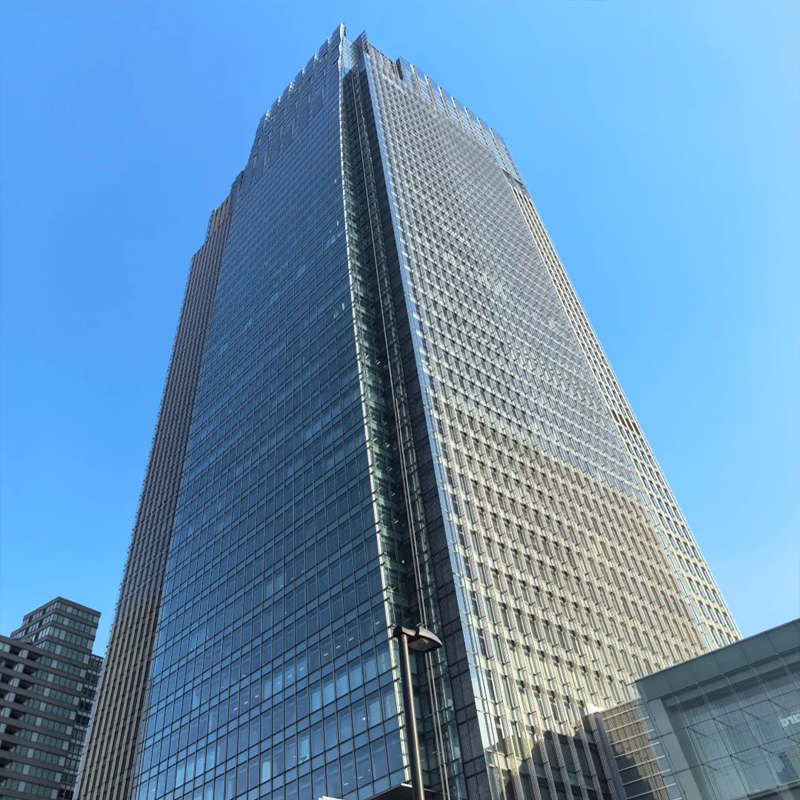
As a iconic element of modern architecture, framed glass curtain wall is widely used in commercial complexes, office buildings and other structures due to its advantages of transparency and aesthetics. However, traditional glass curtain wallhas the pain point of high energy consumption. Statistics show that about 30% of building energy consumption comes from heat transfer and heat loss of glass curtain wall. To balance the decorative and energy-saving properties of glass curtain wall, there is no need for complex transformations. Significant energy-saving effects can be achieved through a few steps such as optimizing glass selection, upgrading insulated glass configuration, and improving structural design. This article will focus on core keywords and break down the key points of energy-efficient design for framed glass curtain wall, providing practical solutions for designers.
Step 1: Accurate Selection – Making Glass the Foundation of Energy Efficiency
The energy-saving performance of framed glass curtain wall primarily depends on the material and parameters of the glass itself. Choosing the wrong type of glass will make subsequent energy-saving design less effective. Therefore, precise control is required from the following three dimensions:
1.Prioritize the Use of Low-Emissivity (Low-E) Glass
Low-E glasscan effectively block the transmission of infrared and ultraviolet rays by coating a special metal film on its surface. It not only reduces the entry of solar radiant heat into the room in summer and lowers air conditioning energy consumption, but also retains indoor heat in winter and reduces heating needs. Compared with ordinary glass, the thermal transmittance (U-value) of Low-E glasscan be reduced by more than 30%, making it a core material for energy conservation in framed glass curtain wall. During design, attention should be paid to adjusting the orientation of the Low-E film according to the climate zone where the building is located. It should face the indoor side in cold areas and the outdoor side in hot areas to maximize the thermal insulation effect.
2.Reasonably Determine Glass Thickness and Layers
The thickness of glass directly affects its thermal insulation performance and structural stability. In framed glass curtain wall, single-layer glass has basically been eliminated due to fast heat transfer, and double-layer or multi-layer insulated glass has become the mainstream choice. For temperate regions, double-layer insulated glass with a specification of 6mm+12A+6mm can meet basic energy-saving requirements; for cold regions, it is recommended to use triple-layer insulated glass with a specification of 6mm+12A+6mm+12A+6mm, whose thermal transmittance can be as low as 1.8W/(㎡·K) or below. At the same time, the thickness of glass needs to match the frame structure to avoid affecting the overall energy-saving effect due to insufficient thickness.
3.Select High-Quality Glass Raw Sheets and Processing Technology
The quality of glass raw sheets directly determines the energy-saving performance. Float glass that meets national standards should be used, and ordinary plate glass should be avoided. During the processing process, the cutting accuracy and edge treatment quality of glass will affect the sealing performance of insulated glass, thereby reducing the energy-saving effect. It is recommended to use high-precision cutting equipment and edge grinding technology to ensure that the edges of glass are flat and smooth, and reduce the bonding gap between the sealant and glass.
Step 2: Upgrade Configuration – Enabling Insulated Glass to Play a Core Energy-Saving Role
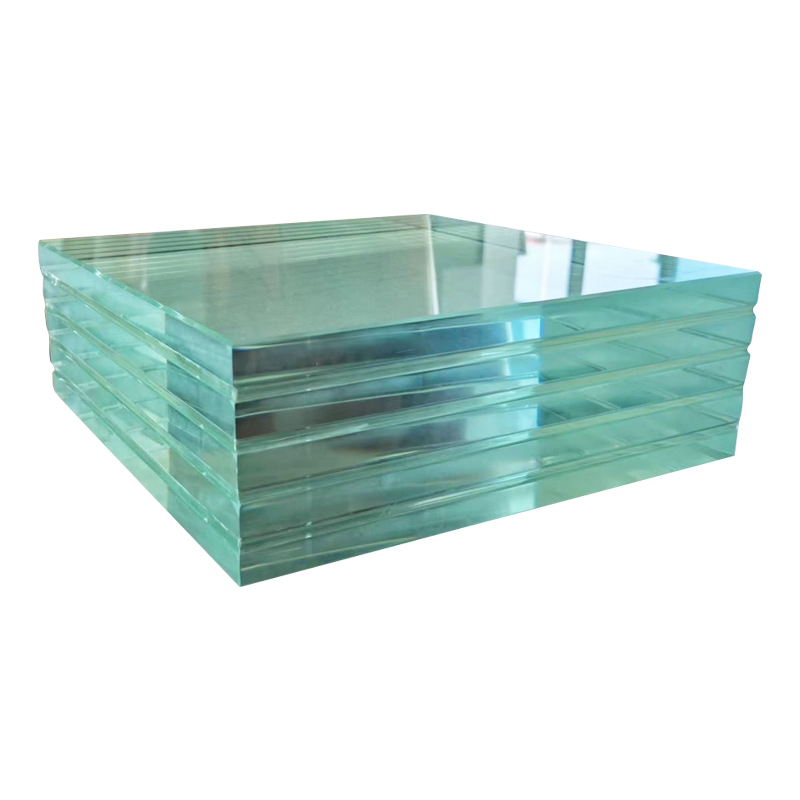
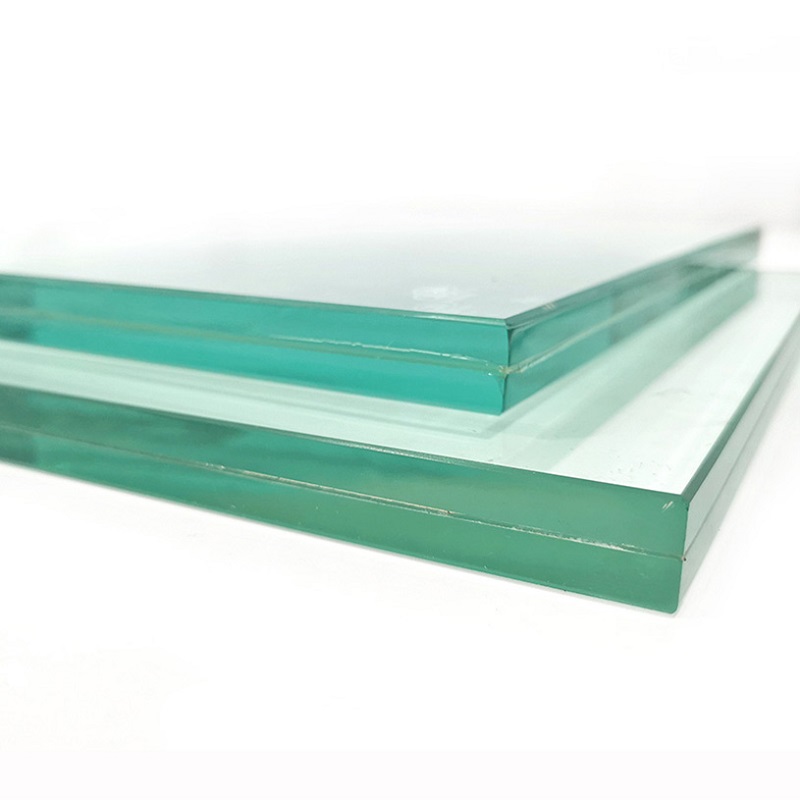
Insulated glass is a core energy-saving component of framed glass curtain wall, and its structural design, filled gas, sealing performance, etc., directly affect the overall energy consumption. The energy-saving effect of insulated glass can be maximized through the following optimizations:
1.Optimize the Cavity Structure of Insulated Glass
The cavity width of insulated glass is positively correlated with energy-saving performance, but it is not the wider the better. When the cavity width increases from 6mm to 12mm, the thermal transmittance decreases significantly; after exceeding 12mm, the decreasing range gradually reduces, and it will increase the weight and cost of insulated glass. Therefore, in the design of framed glass curtain wall, the cavity width of insulated glass is recommended to be controlled between 12-16mm. For triple-layer insulated glass, a "wide-narrow-wide" cavity combination (such as 12mm+6mm+12mm) can be adopted to ensure energy-saving effect while considering structural rationality.
2.Fill Inert Gas to Improve Thermal Insulation Performance
Filling the cavity of insulated glass with inert gas (such as argon, krypton) can reduce the thermal conductivity of the gas and improve the thermal insulation effect. Argon has become the most widely used filling gas due to its low cost and significant effect. After filling with argon, the thermal transmittance of insulated glass can be reduced by 15%-20%, and it can reduce the condensation phenomenon inside the glass. During design, attention should be paid to ensuring that the filling rate of inert gas is not less than 90%, and the leakage rate should be tested by professional equipment to ensure long-term use effect.
3.Strengthen the Sealing Performance of Insulated Glass
The sealing performance of insulated glass is the key to energy conservation. Seal failure will lead to gas leakage and water vapor entry in the cavity, resulting in a significant decline in energy-saving effect. In the design of framed glass curtain wall, a "double-seal" process should be adopted: the first seal uses butyl rubber to block the penetration of gas and water vapor with its high airtightness; the second seal uses polysulfide rubber or silicone rubber to enhance structural stability. At the same time, the selection of sealant should be compatible with the materials of glass and aluminum frame to avoid aging, cracking and other problems. It is recommended to use high-quality sealant that meets national standards and strictly control the construction temperature and humidity.
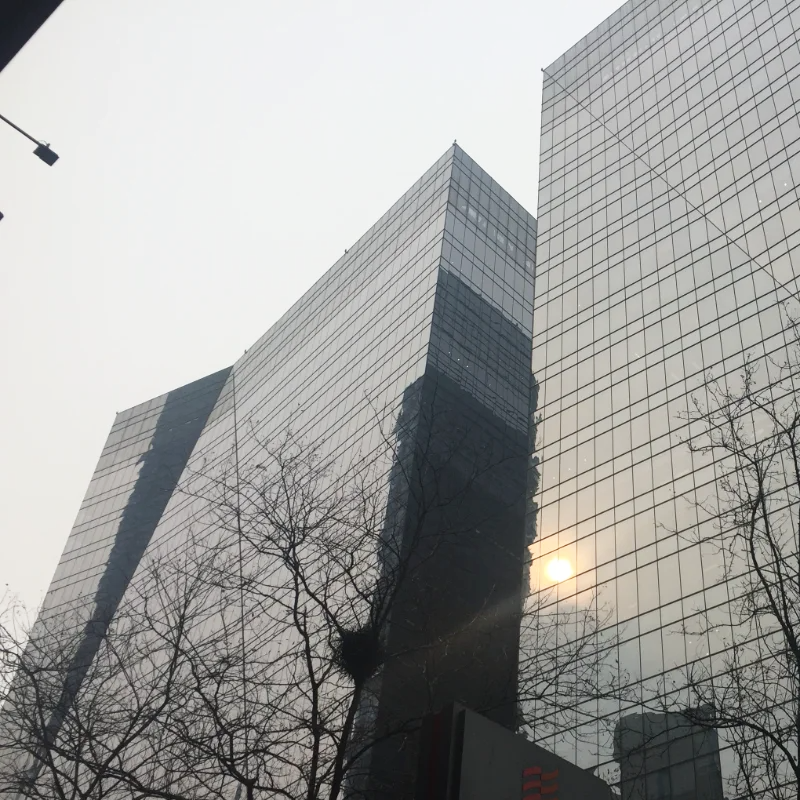
Step 3: Optimize Structure – Achieving Synergistic Energy Conservation between Frame and Glass Curtain Wall
The energy-saving effect of framed glass curtain wall is not only determined by glass and insulated glass; structural details such as frame structure, joint design, and sunshade system are also important, and synergistic energy conservation of various components needs to be achieved:
1.Select Frame Materials with Low Thermal Conductivity
The thermal conductivity of frame materials directly affects the heat transfer loss of the curtain wall. Traditional aluminum alloy frames have high thermal conductivity (about 237W/(m·K)) and are weak links in energy conservation. During design, thermal break aluminum alloy frames can be used. By embedding thermal break strips with low thermal conductivity (such as PA66 nylon strips) in the aluminum profiles, the thermal transmittance of the frame can be reduced to below 3.0W/(㎡·K). For buildings with higher energy-saving requirements, stainless steel or FRP (Fiber Reinforced Plastic) frames can be selected, which have lower thermal conductivity and better energy-saving effect.
2.Optimize the Joint Sealing Design of Glass Curtain Wall
The joint parts of glass curtain wall (such as the connection between beams and columns, the junction between glass and frame) are the main channels for heat transfer and also weak points in sealing. During design, sealing strips and sealant should be installed at the joints to form multiple sealing lines of defense. For example, EPDM (Ethylene Propylene Diene Monomer) rubber strips are used for sealing between glass and aluminum frames, and foaming agents and sealant are filled at the connections between beams and columns to avoid thermal bridge effect. At the same time, the joint design should be convenient for construction and maintenance to ensure the long-term effectiveness of sealing materials.
3.Match with Efficient Sunshade Systems to Reduce Solar Radiation
Solar radiant heat is the main source of energy consumption of glass curtain wall in summer. Matching with sunshade systems can effectively block direct sunlight and reduce indoor temperature. In the design of framed glass curtain wall, external or internal sunshade systems can be used: external sunshades (such as shutters, grilles, sunshade panels) can block solar radiant heat before it enters the glass, with an energy-saving effect of more than 30%; internal sunshades (such as curtains, venetian blinds) are easy to install, but their energy-saving effect is slightly inferior to that of external sunshades. During design, appropriate sunshade forms should be selected according to the building orientation and climate conditions. For example, vertical shutters can be used for east and west-facing curtain walls, and horizontal sunshade panels can be used for south and north-facing curtain walls.
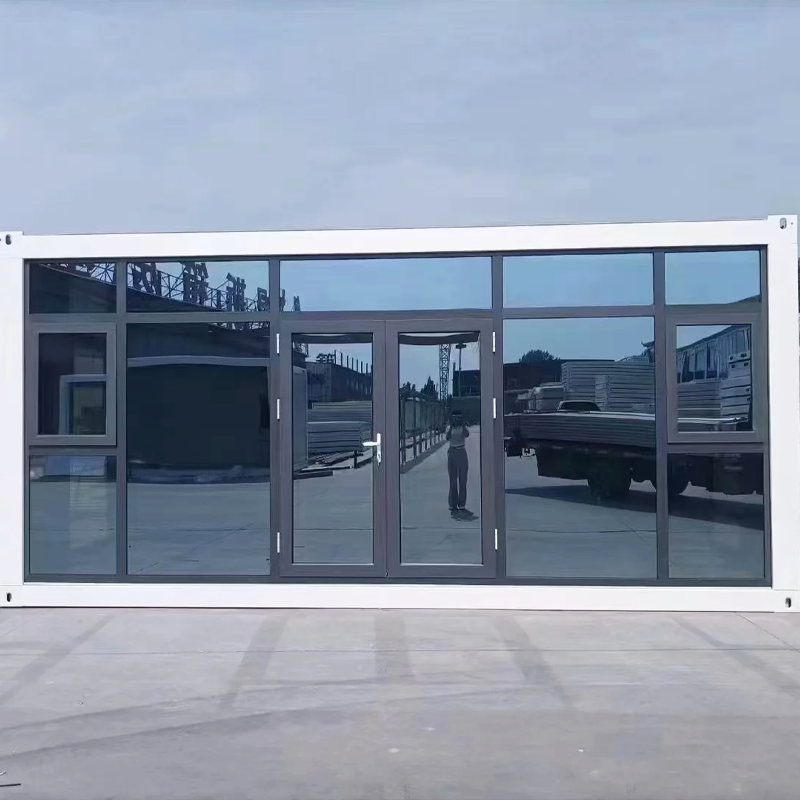
Step 4: Detail Control – Ensuring the Implementation of Energy-Saving Effect of Glass Curtain Wall
The energy-saving design of framed glass curtain wall not only requires a reasonable plan, but also needs to ensure the implementation effect through detail control to avoid energy-saving failure due to improper construction or neglect of details:
1.Control the Window-Opening Ratio of Glass Curtain Wall
The window-opening ratio directly affects the airtightness and thermal insulation performance of glass curtain wall. The larger the window-opening area, the higher the energy consumption. During design, the window-opening ratio should be reasonably controlled according to the functional needs of the building, and generally should not exceed 30% of the total area of glass curtain wall. At the same time, energy-saving windows with an airtightness level of not less than Grade 6 should be selected, and the opening method is recommended to be inward-opening and inward-tilting, which not only ensures sealing performance but also improves use safety.
2.Optimize the Installation Accuracy of Glass
Insufficient installation accuracy of glass will lead to gaps between glass and the frame, forming air infiltration and reducing the energy-saving effect. During construction, the levelness, verticality and flatness of glass should be strictly controlled in accordance with design requirements to ensure that glass is closely attached to the frame. For insulated glass, collision and scratch on the Low-E film on the glass surface should be avoided during installation to prevent affecting the energy-saving performance.
3.Do a Good Job in Thermal Insulation Treatment of Glass Curtain Wall
In addition to glass and frames, the thermal insulation treatment of glass curtain wall should also cover the surrounding structures. For example, the gaps between the curtain wall and the main structure need to be filled with thermal insulation materials (such as rock wool, extruded boards) to avoid thermal bridge formation; the bottom and top closing parts of the curtain wall should be well thermally insulated to prevent cold air intrusion. At the same time, the combustion performance of thermal insulation materials should meet the building fire protection requirements to avoid potential safety hazards.
Conclusion: Core Logic of Energy-Efficient Design for Framed Glass Curtain Walls
The energy-efficient design of framed glass curtain wall is not a complex project. The core lies in focusing on the three keywords of glass, insulated glass, and glass curtain wall, and advancing step by step from the four dimensions of material selection, configuration upgrade, structural optimization, and detail control. By selecting low-emissivity glass, optimizing the structure of insulated glass, improving the sealing performance of frames, and matching with sunshade systems, etc., the energy consumption of glass curtain wall can be significantly reduced without sacrificing aesthetics and practicality, and the goal of green and energy-saving buildings can be achieved. In the future, with the continuous development of energy-saving technology, the energy-efficient design of framed glass curtain wall will pay more attention to material innovation and system integration. Designers should continuously pay attention to industry trends and apply more efficient energy-saving solutions to practical projects to promote the development of the building curtain wall industry in a low-carbon and environmentally friendly direction.